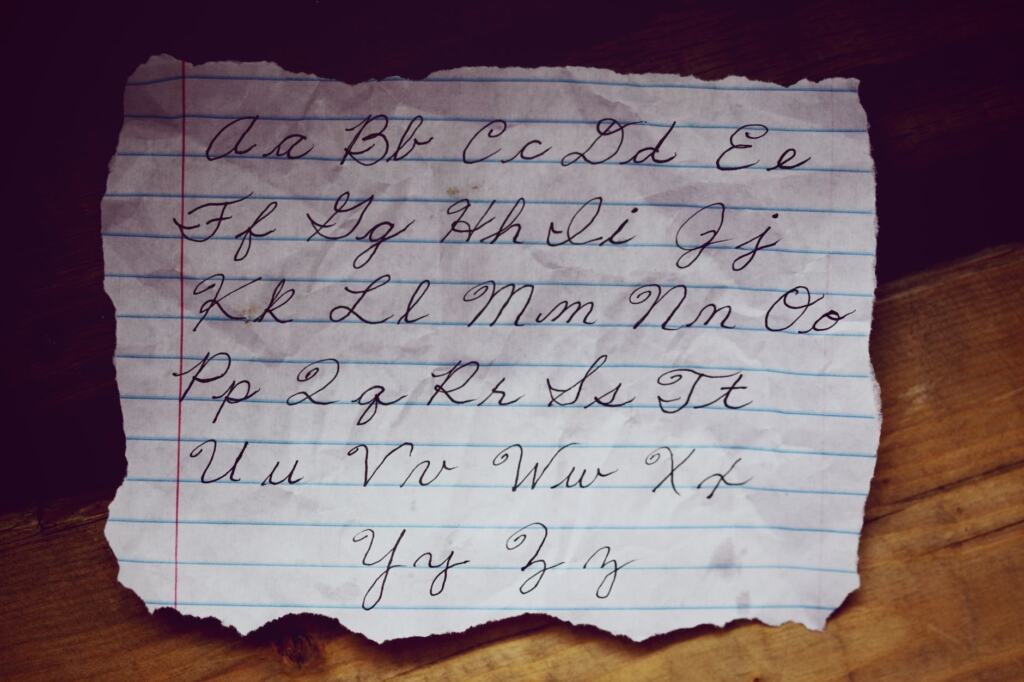
A child has printed pages of cursive and still struggles with joins. Cursive writing worksheets pdf work best when the sheet type matches the skill being practised and paper tilt and pencil grip are set correctly first.
Free sheets from teacher-resource sites cover most needs. Learners who outgrow printables can move on to the best online writing courses.
Free cursive worksheet sources
Free sources fall into three styles: stroke-based phonics sheets, alphabet and themed word sets, and a full tracing pack. Each suits a different learner, so match the source to the problem you are solving rather than downloading everything.
Literacy Learn: stroke groups with phonics
Literacy Learn offers 11 free cursive handwriting sheets aligned to the Science of Reading. The sheets are grouped by movement type and spelling focus: Swing Up Letters (3), Overstroke Letters (2), Digraph Sh (2), Soft C (2) and Soft G (2). They are designed to teach cursive in connection with phonics and spelling, which suits teachers and home educators who want handwriting practice to reinforce reading instruction.
Mama Geek: lowercase, uppercase and word sets
Mama Geek’s free printable cursive sheets cover lowercase letters a to m and n to z, and uppercase A to M and N to Z. Themed word sets cover days, common words, animals, colours and numbers. Each sheet comes in two versions, looped and unlooped, so families can choose the style that matches what the child’s school teaches. Later sheets use high-frequency words from phonics phases 2, 3, 4 and 5.
Lesson Tutor: a full A-to-Z tracing pack
Lesson Tutor states that its 25 cursive alphabet worksheets are free to download as PDFs. Learners trace and write each uppercase and lowercase letter multiple times, and every sheet includes guided practice lines for smooth, consistent letter formation. This pack suits a learner who needs plenty of repetition on the basic shapes before moving to words.
Common mix-ups about cursive worksheets
Most disappointments with printable practice trace back to a few assumptions. The table sets each assumption against what the free sheets actually provide.
| Common assumption | What the sheets show | Planning use |
|---|---|---|
| Any alphabet sheet teaches cursive equally well | Literacy Learn teaches letters in groups by movement pathway (Swing Up, Loops, Others, Flat, Bridge, Overstrokes), with Swing Up letters first | Look for sheets grouped by stroke, not only in a-to-z order, and begin with the Swing Up group |
| Cursive always means looped letters | Mama Geek provides looped and unlooped versions of each sheet | Choose the version that matches the style used at school, and stay with it |
| Worksheets only practise handwriting | Literacy Learn pairs letter formation with phonics and spelling; Mama Geek’s later sets use high-frequency words from phonics phases | Pick sets that echo what the child is currently reading and spelling |
| The sheet does all the work | Literacy Learn’s sheets assume a 45-degree paper tilt and a set pencil grip | Set up paper and pencil before the first line is written |
Figures and descriptions above come from Literacy Learn and Mama Geek.
- Fluent writing means fully joined writing. Literacy Learn cites research that by middle school, fluent writers often use a mixed script rather than pure cursive. The realistic goal is comfortable, legible, flowing handwriting, not a perfect copybook hand.
- Free means unrestricted. Literacy Learn says its resources and printables are designed for personal use only in homes and classrooms, and each teacher must download his or her own copy. Share the link with a colleague rather than forwarding the file.
What each worksheet type teaches
A good cursive sheet teaches one thing at a time. The free packs above split into three useful types, and the best order is usually movement first, whole alphabet second, words last.
Stroke-group sheets
Literacy Learn’s movement-pathway grouping puts letters that share a motion on the same pages. Its Swing Up Letters and Overstroke Letters sheets build the basic strokes, and the group order starts with Swing Up. These sheets suit beginners, and also older children whose letters are formed inconsistently.
Alphabet tracing sheets
Lesson Tutor’s pack gives repeated tracing and writing of each uppercase and lowercase letter on guided lines. This is the right tool for fixing shape and consistency. Once a child forms a letter correctly without tracing, move on rather than repeating the same page.
Spelling-pattern and word-set sheets
Literacy Learn’s Digraph Sh, Soft C and Soft G sheets practise cursive on spelling patterns, so the hand learns the pattern as well as the shape. Mama Geek’s themed sets for days, animals, colours and numbers, and its phonics-phase high-frequency word sheets, move practice to whole words. Use these once individual letters are secure.
Paper tilt and pencil grip
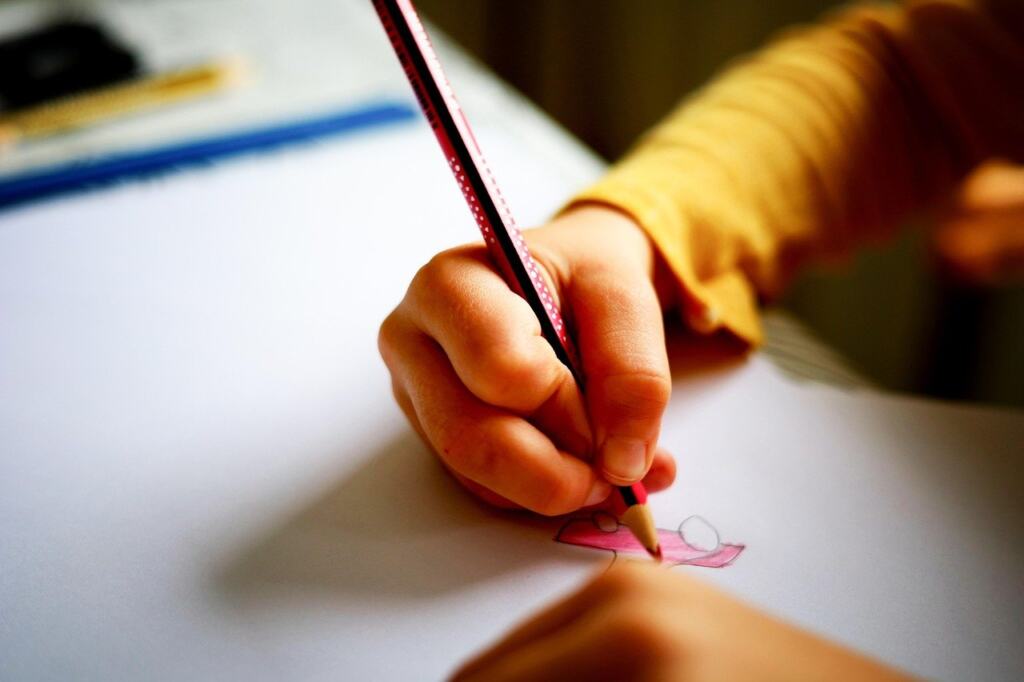
Literacy Learn’s instructions tilt the paper at a 45-degree angle, toward the writing hand. The pencil sits with the thumb and pointer finger gripping it and the middle finger acting as a bridge. Check both before a session begins, because a sheet printed perfectly cannot compensate for paper left square to the desk edge.
Adjusting practice by age
Age matters less than what a child can already do. Start with stroke control, add letters, then words, and let each learner’s current reading and spelling decide which sheet comes next.
Early learners
Children who are new to cursive suit Literacy Learn’s Swing Up group first, or Lesson Tutor’s tracing pages with guided lines. If the child is working through phonics phases 2 to 5, Mama Geek’s high-frequency word sheets let handwriting practice reinforce the words they are reading. Keep sessions short and stop when letter shapes begin to slip.
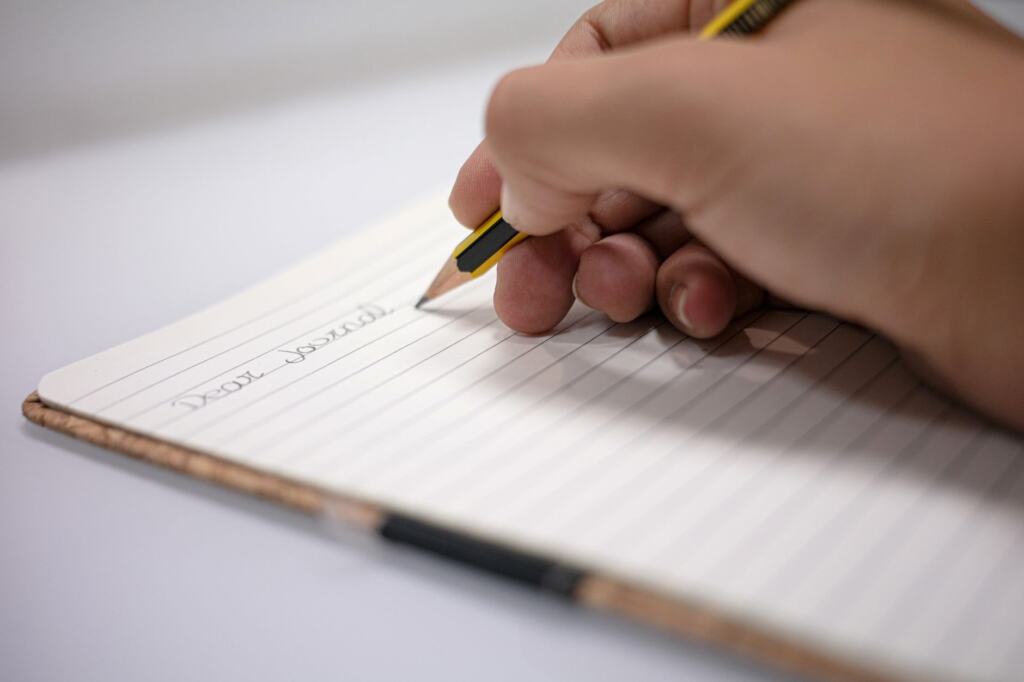
Confident printers
Children who already write print reliably can move from stroke groups to spelling-pattern sets and themed word lists. Use Mama Geek’s looped or unlooped version to match school, and move from tracing to independent writing on guided lines.
Older learners
Because fluent writers often settle into a mixed script by middle school, older learners need fluency and legibility more than endless alphabet drills. Use stroke-group sheets to correct shaky letters, then copy material the learner cares about. Story starters such as the 100 Spine-Tingling Horror Writing Prompts To Spark Dark Stories In 2026 give a reason to write longer passages by hand. Learners who want structured guidance beyond handwriting can explore free writing courses.
Frequently asked questions
| Question | Answer |
|---|---|
| Is teaching cursive necessary? | Literacy Learn says there is not yet enough research to say whether teaching cursive is a necessity. Treat it as a skill to build for fluency and school expectations, not as a proven requirement. |
| What paper size are the Lesson Tutor worksheets? | They are PDFs in A4 paper sizes. If you print on a different paper size, check the printer’s scaling option so the page fits. |
| What is simultaneous oral spelling? | Literacy Learn describes it as a procedure in which students say the letter names aloud while forming the letters, pairing the spoken name with the hand movement. |