First grade writing prompts work best when they start from something the child knows or loves, and come with a sentence starter or a drawing option for children who stall. Match the prompt type to the skill you want to practise.
The prompts below are sorted into narrative, opinion and informative writing, with simple ways to check progress. Families who want structured practice beyond prompts can also look at the best online writing courses.
Why familiar topics make prompts work
Young writers produce more when the topic is already in their heads. Student Treasures notes that writing often comes easiest when a child is describing something they love. A prompt about a pet, a favourite animal or a game at recess removes the first hurdle, which is deciding what to say.
Choice matters too. TeachersFirst says student choice is key to helping student voice come through in writing. For a targeted assignment, it suggests using a prompt list to narrow down 2-3 possible choices rather than offering the whole bank. That is a sensible size for a first grader: enough freedom to feel ownership, not so much that choosing becomes the task.
The practical result is a simple method. Pick a prompt type for the skill you are practising, offer a small set of prompts of that type, and let the child choose.
Narrative, opinion and informative prompts at a glance
Each writing type asks the child to do something different. Narrative prompts ask for a short account of what happened. Opinion prompts ask for a choice and a reason. Informative prompts ask the child to explain how something works or what they know.
| Writing type | Example prompt | Planning use |
|---|---|---|
| Narrative | Write about a special bond you have with an animal. | Good for children who already have stories to tell; suits a drawing-first approach. |
| Opinion | What is your favorite thing about this season, and why? | Practises stating a choice and backing it up with a reason. |
| Informative | Tell how you get ready for school in the morning. | Builds ordered, step-by-step thinking from a routine the child knows well. |
The narrative example comes from the 3P Learning prompt list and the opinion example from Student Treasures; the informative example is a simple everyday routine prompt.
Narrative prompts: tell a short story
Narrative prompts suit children who like to talk about what happened to them. Ask for a beginning, a middle and an end, and encourage time words such as first, next and last. Keep the expectation modest: a short sequence with a feeling or a detail is a good result.
Everyday experiences
- A pet that made you laugh. Say what happened first, what you did and how you felt.
- A rainy day you liked. What did you wear, what did you do and how did the day end?
- A trip to the park. Mention something you played on and something you saw.
Small adventures
- A small treasure. Tell a story about finding a shiny rock or a special button, and say where you found it.
- A lost toy. Say where it was and who helped you find it.
- An ordinary task turned into an adventure. 3P Learning suggests a story where a boring, everyday experience gets turned into a big adventure. For a first grader, name the task yourself, such as brushing teeth or packing a backpack.
- A special bond with an animal. This is another prompt from the same list that works well with a quick drawing first.
Narrative writing also leads naturally into rhythm and imagery. When a child is comfortable with short stories, the 50 Poetry Writing Prompts To Jumpstart Your Creativity In 2026 offer a lighter, shorter form to try next.
Opinion prompts: give a choice and a reason
Opinion writing asks a child to say what they think and why. Student Treasures describes understanding the difference between facts and opinions, and expressing both effectively, as a foundation for literacy. That makes opinion prompts a useful partner to informative ones.
Prompts for first graders
- Seasons. What is your favorite thing about this season, and why?
- Animals. Choose an animal you think is amazing, and explain what makes it so special.
- A letter. Write a letter to the President offering some good advice. Student Treasures lists all three of these for first-grade opinion writing.
- Everyday choices. Which do you like better, apples or bananas? Tell a reason.
- School life. Should we have a class pet? Say why or why not.
- Time travel. If you could travel through time, would you go to the past or the future? 3P Learning frames this as a choice that the writer then explains.
Teach the reason word early. Model a sentence aloud, such as “I like apples because they are sweet,” and ask the child to say their own reason before writing it. Prompts that ask a child to agree or disagree with a statement work the same way, but a statement written for older children may need simpler wording.
Informative prompts: share facts or explain how
Informative prompts ask the child to explain something they know. They suit practical topics: routines, animals, plants and household objects. Ask for ordered steps, descriptive words and clear action verbs such as cut, make and put.
- How to make a sandwich. List the steps in order, or choose a safe alternative.
- A favourite animal. Write facts you know about it and where it lives.
- What a plant needs to grow. Name what it needs and where you might find a plant.
- Getting ready for school. Put the morning steps in order.
- A birthday party. Name some things that usually happen.
- A tool at home. Say what a spoon or a toothbrush does and how you use it.
For children who prefer pictures, a labelled drawing can stand in for part of the writing. The Picture Writing Prompts: 75 Inspiring Image-Based Ideas To Spark Creativity In 2026 guide has image-led ideas that pair well with this approach.
Helping a first grader write sentences
A child who has an idea but cannot start usually needs a frame, not more explanation. Student Treasures suggests giving a simple writing strategy such as framed sentences to guide responses when students struggle to begin.
Useful starters are short and match the prompt type:
- Narrative: Write a story where a boring, everyday experience gets turned into a big adventure.
- Opinion: “I like… because…”
- Informative: “You need… Then you…”
Say the sentence aloud before the child writes it. Then check the basics: a capital letter at the start, spaces between words and ending punctuation. Fade the starter once the child no longer needs it, and let the strongest writers add detail instead.
Using prompts at home and in the classroom
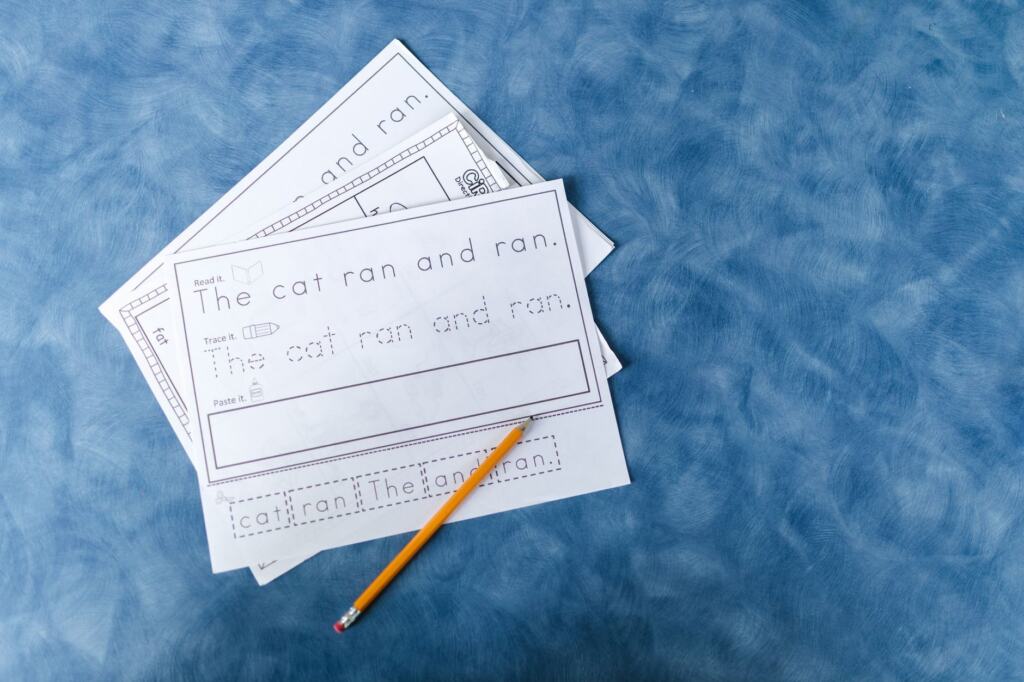
Routine matters more than length. One teacher-created first-grade program has students write every single day to build skill and confidence. It suggests building daily prompts into the schedule as morning work or a centre so that writing happens without extra planning.
At home, the same idea scales down. Choose a regular time, present a small set of prompts, and keep the session short enough that the child finishes feeling successful. Read the prompt aloud, think aloud as you plan your own answer, then let the child write. Keep a model sentence visible: the same program includes an example with each prompt so students understand the expectations.
Rotate between narrative, opinion and informative prompts so that no single type becomes routine. When the child finishes, read the page together and respond to the ideas before the mechanics.
Simple ways to check progress
Keep assessment light and consistent. A short checklist is enough for a first grader:
- Legibility: can another person read the letters and words?
- Sentence basics: capital letter, spaces and ending punctuation.
- Idea clarity: does the sentence answer the prompt?
- Type-specific element: a sequence for narrative, a reason for opinion, an ordered step or fact for informative writing.
A simple three-level scale of needs support, developing and confident is easier to apply than a score. Judge completeness and clarity rather than length, since a short, clear sentence is better evidence of progress than a long, muddled one.
Keep a dated sample of work from each writing type and compare them over time. Growth usually shows as steadier sentences, more detail and less help needed. Give praise for effort plus a single specific next step. For exact grade-level expectations, check the first-grade writing standards your state or district uses, and treat these prompts as practice material rather than a standards checklist.
Frequently asked questions
How often should a first grader practice writing?
Daily is the pattern in at least one first-grade prompt program, where students write every day as part of the routine. At home, regular short sessions suit the same purpose, and the best frequency is the one a family can keep up.
Should children pick their own prompt?
Often yes. TeachersFirst describes student choice as key to student voice, and suggests narrowing a list to 2-3 options for a targeted assignment. Choosing from a short set gives ownership without overload.
Can I use prompts written for older children?
Yes, with simpler wording. The 3P Learning bank offers 100 writing prompts for kids, and its wording is not specific to first grade, so shorten the language and link the topic to the child’s own experience.
Do first graders have to write a full story?
No. A short sequence with a feeling or detail is enough for narrative prompts, and an opinion with a reason is enough for opinion prompts. A drawing can support the writing, and the amount of text can grow as the child gains confidence.