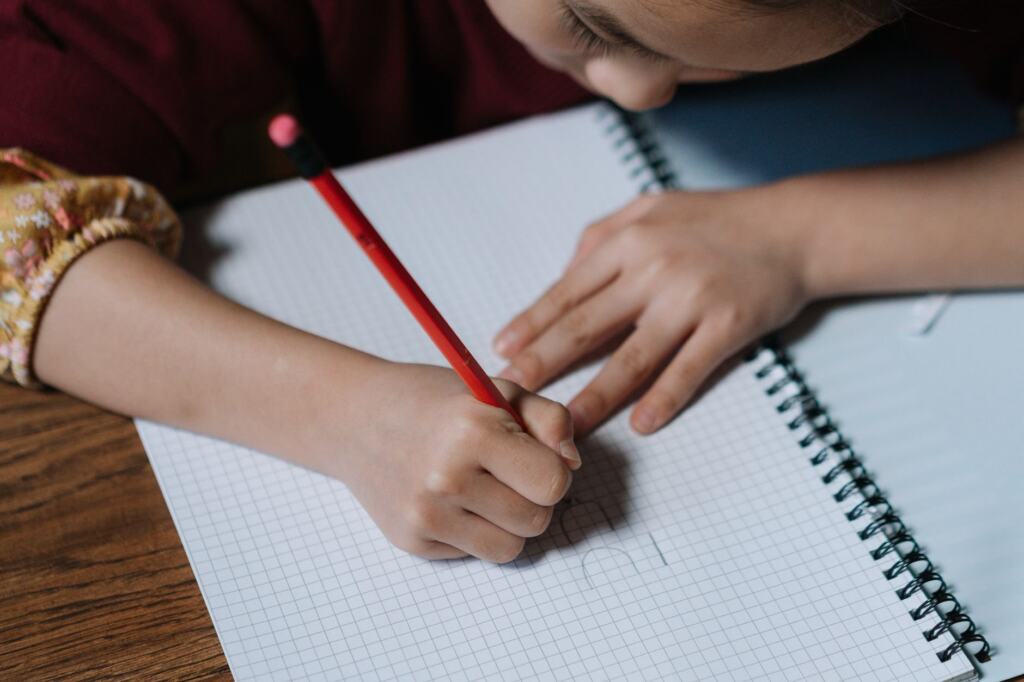
A fourth grader stares at a blank page because the prompt was too vague. Good fourth grade writing prompts are specific, tied to narrative, opinion or informative writing, and short enough to finish quickly.
The prompts below are grouped by writing type, with timing guidance for teachers and parents. Learners who want guided instruction beyond a prompt bank can compare the best online writing courses, and older students can move on to 100 Writing Prompts For High School Students: Fresh Ideas To Spark Skills In 2026.
Why open-ended prompts often fall flat
The common assumption is that the freest prompt produces the most creative writing. For this age group the opposite is often true. Papertyper describes fourth graders as old enough to write with structure and young enough to enjoy playful topics. A strong prompt therefore pairs a clear task (a claim, a sequence, a problem to solve) with a topic that feels like fun, such as a talking pencil or a lost sock.
Prompts also work best as a habit rather than a one-off assignment. The same publisher notes that prompts make writing part of everyday classroom life, which is why a bank of ready tasks saves a teacher or parent from inventing something new each day. The table below sets four common beliefs against what the evidence suggests.
| Common belief | What works better | Planning use |
|---|---|---|
| The more open the prompt, the better the writing | Fourth graders can handle structure and still enjoy playful topics | Give each prompt a clear job, then wrap it in a silly or personal topic |
| Fourth grade writing means stories | Students are learning to express opinions, explain information and tell stories | Rotate all three types instead of defaulting to narrative |
| Daily writing needs long sessions | About five minutes of daily free-writing can warm students up for longer essays later in the year | Keep the daily habit short and save longer drafts for planned sessions |
| Only the teacher can give feedback | Pairs can swap drafts and use a checklist for feedback | Give peers or a parent a checklist so feedback stays focused |
These points draw on Papertyper’s fourth grade prompt guide and Studentreasures’ printable worksheet guide.
The three writing types fourth graders practice
Studentreasures names three purposes for grade 4 writing: expressing opinions clearly, accurately explaining information and telling stories. Its free printable worksheets cover opinion, narrative and informative writing, plus brainstorming and revision. Each type asks for a different kind of planning, so a prompt should say which job it is doing.
- Narrative: the student tells a story with a beginning, middle and end. The structure is the main skill, so a story prompt should suggest a problem or a surprise.
- Opinion: the student takes a side and supports it. The prompt should be a question the child can answer from real life, such as homework or recess.
- Informative: the student explains how something works or what it is like. Good prompts ask for steps, layers or a life cycle that have a natural order.
A common mistake is to treat journal writing as a separate category. Lestallion’s list of 50 journal prompts for 4th graders presents journaling as a way to express thoughts, feelings and creativity. Personal prompts like these fit comfortably inside the narrative group below.
Narrative prompts for story practice
Narrative prompts work best when they hand the student a starting situation and leave the ending open. Studentreasures recommends story starters such as a mysterious box appearing on a doorstep, and its narrative worksheet teaches a beginning, middle and end. Brisk suggests having students sketch their setting or main character before writing, which gives reluctant writers something concrete to describe.

- Write about the day you found a hidden treasure in your backyard.
- A mysterious box appeared on your doorstep. What is inside, and what happens next?
- Write about a time you helped someone. Describe what you did and how it made you feel.
- Tell a story from the point of view of a lost sock.
- Write about a time a small choice caused a big surprise.
- Tell a story where an animal becomes the class leader.
- Tell a story about finding a map in the school library.
- Write about a day without electricity. What would you do?
- Tell a story where a small helper saves the day.
- Describe a secret place you would build and explain why it matters to you.
- Your pencil starts talking in the middle of a test. What does it say?
- Write about a surprise party that went wrong in the funniest way.
- Everyone in town wakes up speaking only in rhymes. Continue the story.
- A new student arrives who is secretly a time traveler. Tell what happens at recess.
- Write about the first time you tried something that scared you.
- A door appears in the playground wall. What is behind it?
- Retell a favorite fairy tale from the villain’s point of view.
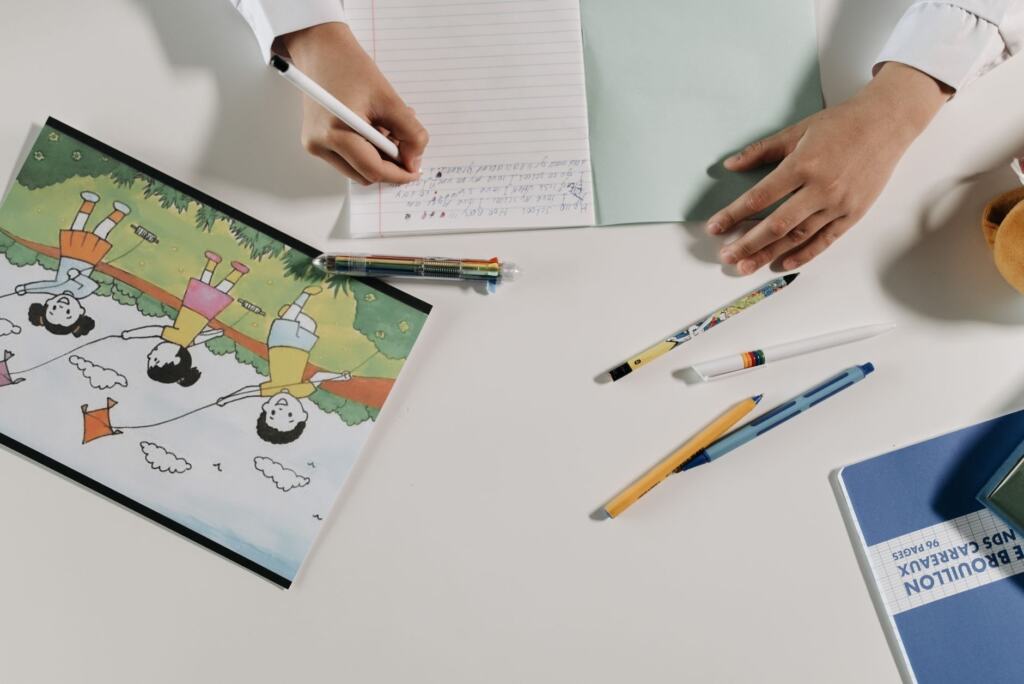
For a student who stalls, ask for the beginning first, then the problem, then the ending. A teacher can show the three parts on the board and let the child fill them in with a single sentence each before drafting a full story.
Opinion prompts for building reasons
Opinion prompts should ask a question a child already has feelings about. Studentreasures lists examples such as whether students should have homework on weekends and whether recess should be longer, and Papertyper offers a question about phones at school. These work because every student can take a side without research.
- Should students have homework on weekends?
- Should recess be longer?
- Should kids be allowed to bring phones to school?
- Should school start later? Give your reasons.
- Should students vote on class rules? Explain why.
- Which subject helps the most with real life? Give reasons and an example.
- Is a dog or a cat the better pet?
- Should every student learn to play a musical instrument?
- Is summer or winter the better season?
- Should students have a say in what is served for school lunch?
- Pick the best book you read this year and convince a friend to read it.
- Should every classroom have a quiet reading corner?
- Is it better to read the book or watch the movie first?
- Should students wear school uniforms?
- Should every class have a class pet?
- In a team, which matters more: winning or having fun?
- Are video games a hobby worth practicing?
Brisk notes that discussing ideas aloud helps students organize their thoughts and build confidence. For opinion pieces, that means talking through the question before any writing starts, so the child arrives at the page with a position and some reasons already formed.
Informative prompts for explaining clearly
Informative prompts ask students to teach the reader something. The best ones have a built-in order, such as steps, layers or stages, which gives the writer a ready outline. Studentreasures offers examples like how volcanoes erupt and the layers of the rainforest, and Papertyper suggests explaining how to make a favorite snack step by step.
- How do volcanoes erupt?
- What are the layers of the rainforest?
- Explain how to make your favorite snack step by step.
- Explain how rain forms, using clear facts and an example.
- Explain the life cycle of a butterfly in your own words.
- Explain how to take care of a pet you do not own.
- Describe your town to a new student who just moved here.
- Explain how photos form in a camera in simple steps.
- Explain the rules of a game so a younger child could play it.
- Describe how a team wins a game by working together.
- Explain how to get ready for school in the morning, in order.
- Write about an animal you find fascinating and how it survives in its habitat.
- Describe how a plant grows from a seed.
- Explain how to be a good friend.
- Describe an invention that would help students and explain how it works.
- Explain how to sort trash and recycling at home.
Two small moves improve these pieces. Studentreasures advises teachers to model an opening with an engaging fact, question or quote, and Papertyper encourages transition words such as first, next and finally. Together they turn a list of facts into an explanation a reader can follow.
Daily time and length
Short and regular beats long and occasional. Both Papertyper and Brisk point to about five minutes a day: Papertyper describes daily free-writing as a warm-up for longer essays later in the year, and Brisk suggests one prompt a day for five-minute journal writing. Use that slot for a quick prompt from any of the lists above.
For length beyond the daily slot, match the piece to the type. A short paragraph is a reasonable target for a single opinion or informative prompt, with a reason and an example. Narrative pieces need room for a beginning, middle and end, so allow a longer planned session at times. Papertyper also suggests rotating narrative, opinion and descriptive tasks to keep writing fresh, so avoid assigning the same type on consecutive days.
When a teacher gives the whole class the same prompt, the writing samples are easy to compare and common weaknesses show up quickly. That makes the short daily slot useful for deciding what the next mini-lesson should cover.
Using prompts at home
Parents do not need teaching experience to make prompts work. Papertyper addresses teachers and parents who want to help kids explore structured writing outside the classroom, so a home routine can mirror the classroom one. Pick a prompt, talk about it first, let the child write, then read the result together.
- Talk before writing: Brisk’s point that discussing ideas aloud helps students organize their thoughts applies at the kitchen table too, especially for opinion questions.
- Use a checklist: Studentreasures suggests students exchange drafts and use a checklist. A parent can take the partner role and check one thing, such as whether a story has a clear beginning and ending.
- Vary the type: Cycle through the three writing types so a child who loves stories also practices explaining and arguing.
Adults who want to model writing themselves can browse 50 Creative Writing Prompts For Adults: Fresh Ideas To Spark Stories, Memoirs, And Poetry and write alongside the child.
Frequently asked questions
| Question | Answer |
|---|---|
| What are good writing prompts for fourth graders? | Prompts that name a clear task and a playful or personal topic, such as a mysterious box on the doorstep, whether recess should be longer, or how volcanoes erupt. |
| How long should a fourth grader write each day? | Published classroom guidance centers on about five minutes of daily free-writing or journaling, with longer pieces scheduled separately. |
| What types of writing do fourth graders learn? | Opinion, informative and narrative writing, supported by brainstorming and revision practice. |
| How can parents use prompts at home? | Read the prompt together, let the child talk through ideas, then review one element of the finished piece with a simple checklist. |