| Situation | What the ISBN does | Planning use |
|---|---|---|
| Selling physical copies to retailers, libraries and bookstores | An ISBN is needed | Get the number before the print edition goes to market. |
| Selling an ebook online through major ebook retailers | An ISBN is not required for online sale | Treat it as optional for an ebook-only release, and reconsider if you add print later. |
| Releasing several product forms, such as paperback, EPUB and PDF | Each form is identified separately | Plan one ISBN for every form you intend to sell. |
| Protecting the work legally | An ISBN is an identifier and conveys no legal or copyright protection | Handle copyright as a separate task. |
| Publishing in a country that regulates ISBN use | In some countries ISBN use is a legal requirement | Check with your national ISBN agency before you publish. |
These effects and conditions come from the International ISBN Agency and Book Riot’s ISBN explainer.
Quick answer to what is isbn number: it is a 13-digit identifier for one book product, and self-publishers need one mainly when selling physical copies to retailers, libraries and bookstores.
An ISBN is one small piece of the wider process of how to get a book published, and the choices below show when it deserves your attention and when it can wait.
Self-publishing decisions
Whether you need an ISBN depends on your formats and sales channels, not on the fact that you are self-publishing. The International ISBN Agency says it is always the publisher of the book who should apply for the ISBN, and that the publisher can be the author when the author has chosen to publish the book themselves. If you self-publish, you are the one who applies and who is responsible for the number.
Print copies
Print is where the ISBN stops being optional in practice. Book Riot states that if you want to sell physical copies to retailers, libraries and bookstores, you will need to get one. Use these cases to decide:
- Selling through bookstores or to libraries: get an ISBN before the files go to print, because the number is how those buyers identify the book.
- Selling only your own copies directly: the retailer and library requirement does not apply, so the number matters less until you approach a bookstore or library.
- Planning a print run: settle the ISBN first, then turn to layout questions such as length, covered in How Many Words Per Page Does a Novel Have? Clear Guidelines For Authors (2026).
Ebooks
Ebooks are more forgiving. Book Riot notes that major ebook retailers do not require your ebook to have an ISBN in order to be sold online. For an ebook-only release, you can publish without buying one. The trade-off is that the book has no ISBN to identify it if you later move into print or want the ebook listed alongside other formats, so consider how likely that is before skipping it.
One ISBN per format and edition
The numbers do not carry across formats. The International ISBN Agency explains that each different product form, such as paperback, EPUB or PDF, should be identified separately. A Michigan State University open textbook guide puts it in practical terms: a hardcover, paperback and ebook of the same title will have different ISBNs, and you can only use one ISBN per title, per format and per edition. That guide also indicates an ISBN cannot be reused.
- New edition: give it a fresh ISBN rather than recycling the old one.
- New format: assign another ISBN to the new product form, and keep the original with the original format.
- Record keeping: note which number belongs to which format, since the same title will carry several.
Copyright and legal limits
An ISBN is not a rights mechanism. The International ISBN Agency is explicit that the ISBN is an identifier and does not convey any form of legal or copyright protection. Buying one does not secure your text, so do not treat the purchase as a substitute for the steps in How To Copyright A Book Or Song: A Clear 2026 Guide To Protect Your Work.
The same agency adds that in some countries the use of an ISBN to identify publications has been made a legal requirement. If you publish in a country where that applies, the question of whether you need one is already settled, and your national ISBN agency can tell you what the rule covers.
Who uses ISBNs and where to find one
The ISBN works as a product identifier across the book trade. The International ISBN Agency describes it as being used by publishers, booksellers, libraries, internet retailers and other supply chain participants for ordering, listing and stock control. For an author, that means the number is what lets a bookstore or library find and handle the exact edition you made.
Metadata is part of the same job. According to the Michigan State University guide, the publisher is responsible for assigning the title to the ISBN and adding the associated metadata. If you self-publish, that task falls to you, so check that the title and details entered against the number match the finished book.

Finding the number on a book
Two places are reliable:
- Copyright page: Book Riot says it usually appears on the copyright page, typically the second or third page of the book.
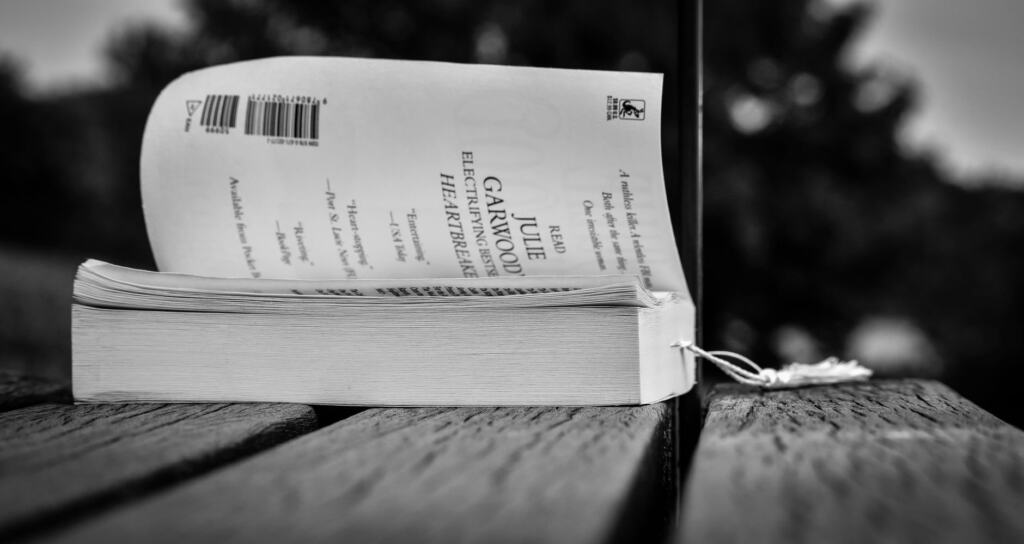
- Back cover: the University of Iowa Libraries notes the code is usually located on the back cover near the bar code.
The barcode and the ISBN are related but not identical. A barcode is a machine-readable representation of the ISBN, according to the Michigan State University guide, so a scanner reads the number you can also read in print.
How to read an ISBN-13
An ISBN is an International Standard Book Number, and the current form has 13 digits. The International ISBN Agency explains that ISBNs had 10 digits until the end of December 2006 and since 1 January 2007 always consist of 13 digits. If you meet a shorter number on an older book, it belongs to the earlier system.
Each ISBN has five elements, separated by spaces or hyphens. Reading left to right:
- Prefix: currently 978 or 979, and always 3 digits long.
- Registration group: between 1 and 5 digits in length.
- Registrant: the next element in the sequence.
- Publication: the element that follows the registrant.
- Check digit: the final single digit.
Hyphens are only a reading aid, so a number printed without them is still the same ISBN.
The check digit and EAN-13
The check digit validates the rest of the number. The International ISBN Agency says it is calculated using a modulus system with alternating weights. Book Riot describes it as a number meant to detect errors and avoid redundancy. Some ISBNs end in an X, and the Georgia Southern University library advises that if the ISBN includes an X, you should include it too when searching.
The move to 13 digits tied the ISBN to retail scanning. Book Riot explains that the change made ISBNs compatible with the International Article Number used in barcodes. In practice, the 13 digits fit the EAN-13 barcode format, which is why the number you read on the copyright page matches the one a scanner picks up from the back cover.
Getting an ISBN and what it costs
Start with the issuing agency for your country. The Michigan State University guide identifies Bowker Identifier Services as the official ISBN agency in the US for buying and registering a unique ISBN. Outside the US, Book Riot points to a database of all agencies selling ISBNs worldwide on the International ISBN Agency website, so that directory is the place to find your national agency.
Agencies sell ISBNs individually or in blocks of 10, 100 or 1000. Decide the quantity by counting formats and editions, using the one-ISBN-per-format rule above:
- One title, one or two formats: an individual ISBN, or a small block if you expect to add formats, is the natural fit.
- A planned series or several titles: a larger block suits an author-publisher expecting to release many formats and editions.
The price depends on the agency and the quantity, so look at your national agency’s current fees before choosing between a single number and a block. Once you buy, assign each ISBN to its title and format and enter the metadata yourself, since the publisher carries that responsibility.
Frequently asked questions
What is an ISBN?
It is an International Standard Book Number, a code that uniquely identifies a book. The University of Iowa Libraries describes it as a 13-digit code, and each product form of a title gets its own.
Do I need an ISBN to self-publish?
Not always. An ebook sold through major online ebook retailers can go without one, but selling physical copies to retailers, libraries and bookstores calls for one. Some countries also make ISBN use a legal requirement.
How much does an ISBN cost?
It depends on the agency and on how many you buy, since they come singly or in blocks of 10, 100 or 1000. Check the current fee with your national agency, such as Bowker in the US.
Is the barcode the same thing as the ISBN?
No. The barcode is the machine-readable form of the number, while the ISBN itself is the identifier printed on the copyright page and near the barcode.