The books every writer should read depend on one decision: do you need craft instruction, models to study, or a habit to sustain? Match one book to that need, then read it with a pencil in hand instead of collecting a long list.
This guide sorts recommendations by the craft lesson each one teaches. For a method to use with any title, see how to read like a writer. For a schedule, see this reading list for writers.
Choosing where to start
Your starting point is set by the problem you are trying to solve, not by a canon. A book that fixes a problem you do not have will teach you little, and a book that is wrong for your stage can set you back. Writer Mary Adkins is blunt about this: in her own list of essential writing books, she says a good book on writing can be a writer’s best friend, while a bad one can derail you. That is the case for choosing deliberately.
Use these criteria in order. They narrow a wide field to a single book.
- Your current obstacle. If you cannot start or keep going, begin with a book about creative practice. If your scenes feel flat or your point of view slips, begin with a craft book that works through examples.
- Your form. Fiction writers, memoirists and essayists borrow different tools. Pick at least one title in the form you actually write, because the lessons transfer most directly there.
- Your appetite for instruction. Some readers want a program to follow, others want a book that shows techniques inside real stories. Choose the structure you will actually finish.
- Your time. A single book read closely teaches more than several skimmed. Settle on one title before you build a list.
Once you know the obstacle, the next sections show how reading turns into skill, then which books suit each need.
How writers learn from reading
Writers learn from reading by noticing the decisions behind the page and then reusing those decisions in their own work. Reading for enjoyment takes in the effect of a story. Reading as a craft skill asks how the effect was produced.
Stephen King’s reading list for aspiring writers makes the same point in plain terms. As Open Culture reports, King says a good many of the books on it might show you some new ways of doing your work. The promise is modest and practical: not that reading makes you a writer, but that it widens your options at the desk.
Adkins gives a concrete example of a technique picked up this way. She credits a book of craft essays with teaching her how to segue between distant third person and close third person. That is a skill most readers absorb without seeing it, and a writer needs to see it. A passage glides from a wide view of a scene into a character’s private thoughts, and the writer who has marked the exact sentence where it happens can do the same.
Three habits turn passive reading into learning:
- Ask what the passage does. Name its job in plain words, such as introducing a character, raising stakes or shifting distance.
- Locate the mechanism. Find the sentence, detail or structural choice that does that job.
- Test it in your own draft. Write a short passage that uses the same move with different content. A technique is only learned once you have tried it.
The following section turns these habits into a repeatable method.
A method for reading like a writer
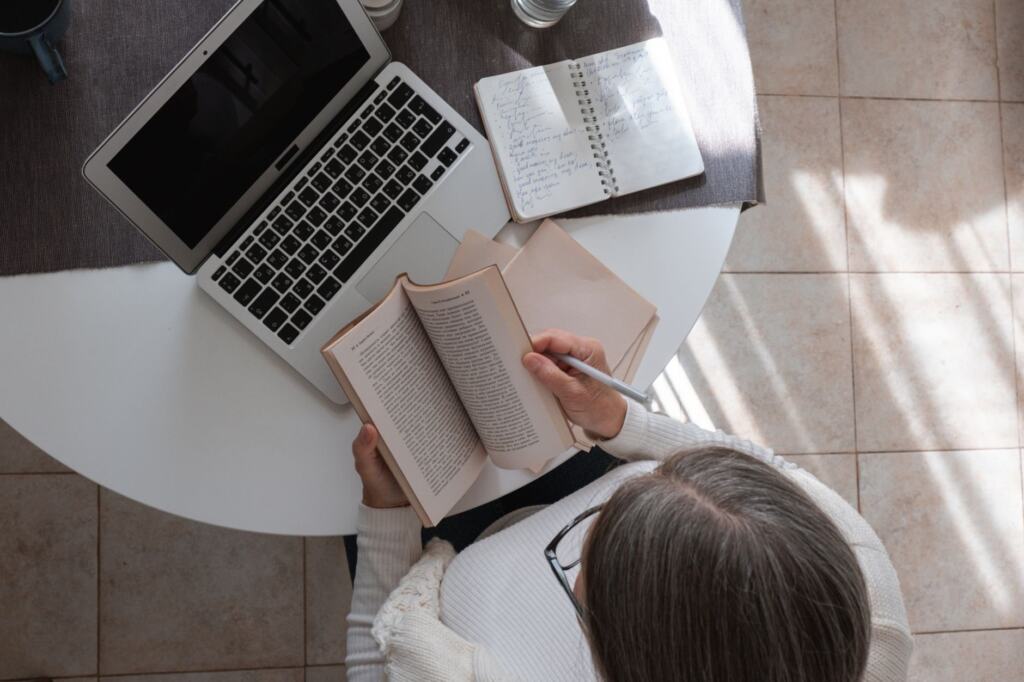
You can read like a writer with a short passage, a pencil and a place to record what you notice. The method works on novels, stories, essays and memoir, and it does not require special equipment.
- Choose a passage worth the effort. Pick a scene that moved you, confused you or bored you. A failure teaches as much as a success.
- Read it once for effect. Do not mark anything yet. Notice what you felt and where your attention rose or fell.
- Read it again for construction. Underline the sentences that carry the effect. Circle repeated words, shifts in time and changes of viewpoint.
- Write a note in your own words. State what the author did and why it may have worked. Keep it to a sentence or two.
- Imitate the move. Draft a few lines of your own that borrow the technique. The imitation writing exercises guide covers this stage in more depth, and copywork for writers covers the slower practice of copying passages out by hand.
If you want prompts rather than a blank margin, the questions to ask about a novel give you ready-made angles. If you want a place to keep your notes between books, how to keep a reading journal explains how to organize them so they feed your drafting.
Passages repay this treatment best when you slow down further, which is the subject of the next section.
Close reading: slowing down on a single passage
Close reading means staying with a short stretch of text long enough to see how each choice connects to the next. It is the difference between knowing a scene is good and knowing why.
Some books teach this directly. According to Adkins, A Swim in a Pond in the Rain takes seven Russian short stories and uses them to teach both craft and process. She notes that Saunders occasionally interrupts a story to point out something to the reader. That interruption is the habit you are trying to build in yourself: the author pauses and says, look at what just happened.
The same source describes Alice LaPlante’s The Making of a Story as using excerpts from published books, stories and essays to illustrate each craft point. This pairing of a claim with a short, real example is a good template for your own notes. State the craft point, quote the lines that show it, then write what you would try differently.
A few practical rules keep close reading useful rather than exhausting:
- Keep the passage short. A page or less is enough. Attention fades on long stretches and your notes turn vague.
- Mark verbs and details, not only ideas. Craft lives in word choice and in what the writer chooses to include, so underline specifics.
- Return after a gap. A passage reread later often shows a pattern you missed the first time.
- Stop when you have one usable idea. You do not have to explain everything. One technique you can reuse beats a page of commentary.
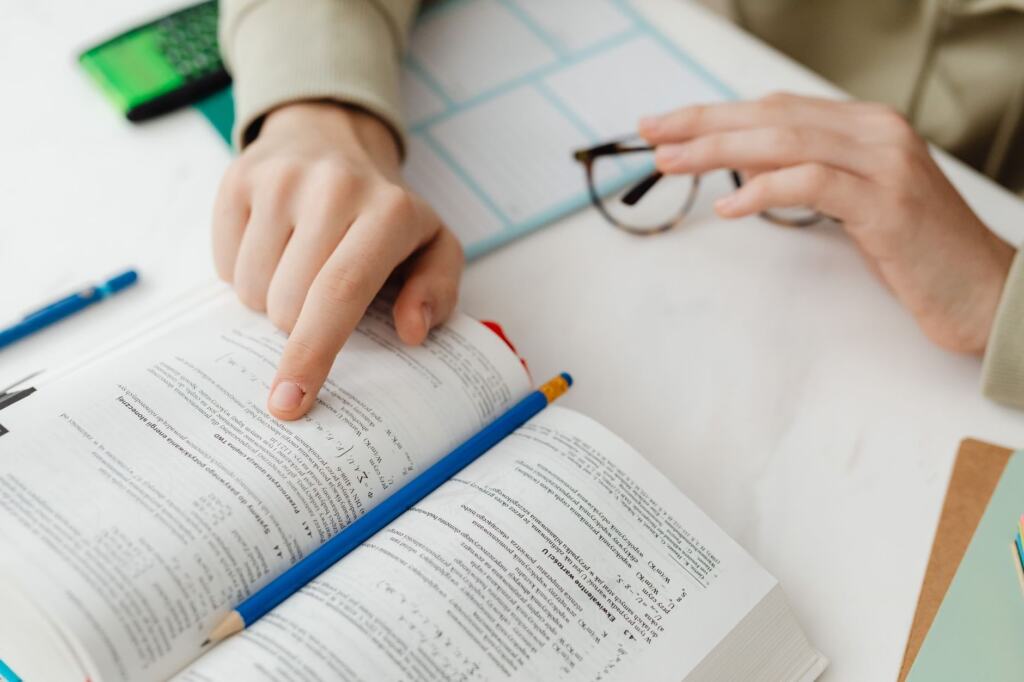
Teaching books like these sit in the wider category of craft guides, which deserve their own comparison.
Craft books: choosing the ones that help
Craft books are worth reading when they match your problem and when their method is one you can use. The judgement call is as important as the title.
The Adkins list, Books Every Writer Needs to Read, shows how varied the useful ones are. Here is how the recommended titles divide by need.
- If you struggle to keep going, try Big Magic. Adkins says it is for everyone, no matter what kind of book you are writing. That makes it a safe first pick when you are unsure of your form.
- If you want a structured push, try The Artist’s Way. It is a program of 12 weeks that the author walks you through. It suits readers who work better with a schedule than with open-ended advice.
- If you want technique shown through stories, try A Swim in a Pond in the Rain. Its seven Russian stories double as a reading course, and the author’s interruptions model close reading.
- If you want viewpoint and scene craft, try The Making of a Story. Its use of excerpts lets you see each technique in context, including how to shift between distant and close third person.
- If your plots feel loose, try John Gardner’s The Art of Fiction. Adkins singles out its view that a story is not a list of random events but a list of events that need to be connected. That gives you a test for your own outline: can you say how each event leads to the next?
Not every famous title is a good fit. Adkins says plainly that she does not recommend Robert McKee’s Story. She warns that a bad book on writing can derail you, so treat any single endorsement, including hers, as one reader’s experience. Sample a book before you commit, and drop it if its method makes you freeze rather than write.
When you want to compare more options by need, the best books on writing craft comparison goes further than this overview.
Stories and novels as models
Craft books explain technique, and stories show it working. A writer needs both, because an explanation you cannot see performed is easy to forget.
Publishers curate lists with this in mind. Penguin, for example, presents six vintage books meant to motivate and inspire aspiring writers on their journey. The framing is worth noting: these are chosen as encouragement and example, not as a syllabus.
Older fiction repays attention because it has survived many readers, and its techniques are often easy to isolate. The guide to classic books every writer should read pairs each title with the skill it shows, which is the approach this article recommends.
Beyond classics, choose novels by the single skill you want to study:
- Dialogue. Read for how speech reveals character and carries information without explanation. The list of books with great dialogue sets out what to learn from each.
- Openings. Read the opening sentence of many novels in a row and notice what each promises. The best first lines in novels breaks down why certain ones work.
- Narrative reliability. If you want to control what a reader can trust, study the best novels with unreliable narrators and the techniques they use.
- Language. If you want a richer range of words, how to improve vocabulary for writing turns wide reading into a deliberate habit.
Choose one skill, read a few books that show it well, and write a short piece that applies it. That sequence keeps the reading tied to output. Life writing is its own model case, and it comes next.
Memoir as a craft model
Memoir shows how a writer turns lived events into a shaped narrative, and it is useful even if you write fiction. The raw material is a life, so the craft is selection: what to include, what to leave out and where to place the emotional weight.
Crying in H-Mart is a current example. A reader-picked list on BuzzFeed describes it as a memoir about growing up Korean American, losing her mother and forging her own identity. That one description names three threads, which is a useful prompt for study: how does the writer braid identity, family and grief into a single story rather than three separate ones?
A fair caution applies. That list frames its picks as books readers would put on a bucket list, so it is a measure of popularity and not a ranking of craft. Treat it as a pointer to a book worth examining, then do your own close reading to decide what it teaches you.
When you read a memoir as a writer, track these things:
- Selection. Which moments get a full scene, and which are summarized in a line?
- Distance. How far does the narrator stand from the younger self she describes?
- Structure. What order are events told in, and what does that order let the reader feel?
These questions work on any book, but memoir makes them unusually visible. Once you have the right books and a method, the remaining challenge is making reading a steady part of your week.
Building a reading habit that supports your writing
A reading habit works best when it is tracked, selective and shaped around what you are writing. Volume matters less than regular contact with good prose and a record of what you learned.
Tracking helps because it makes your reading visible. LibraryThing’s staff year-end lists cover what staff read during the year, not only books published that year. That is a useful model for a writer. Your list should record the books you actually read, whatever their publication date.
Treat other people’s lists as menus, not obligations. King’s list of 96 books is offered by him as personal. As Open Culture quotes him, they are the ones that worked for him, that is all. Borrow from it the way you would from a friend’s shelf: pick a few that suit your form and skip the rest.
A few judgement rules keep the habit sustainable:
- Pair reading with a writing session. Read a passage, then write. The pairing ties the lesson to practice.
- Alternate kinds of book. Follow a craft guide with a story that shows the same skill, and a challenging title with an easy one.
- Abandon without guilt. A book that teaches you nothing right now can wait. Your time is better spent on one that does.
- Decide how much suits your life. The guide on how much a writer should read helps you set a pace that fits, and audiobooks vs reading for writers weighs the formats against each other.
With a method, a set of titles and a habit in place, it helps to see the main recommendations side by side.
Craft recommendations at a glance
This table collects the craft titles discussed above and the lesson each is credited with teaching, so you can pick by need.
| Book | Craft lesson | Planning use |
|---|---|---|
| Big Magic | Recommended for everyone, regardless of what kind of book you write | A safe first read when your form or stage is unsettled |
| The Artist’s Way | A 12-week program for unlocking creativity | Choose it if you need a schedule to work through |
| A Swim in a Pond in the Rain | Craft and process taught through seven Russian short stories, with the author interrupting to point out details | Choose it to practise close reading on short fiction |
| The Making of a Story | Craft points illustrated with excerpts, including shifting from distant to close third person | Choose it for viewpoint and scene work with examples |
| The Art of Fiction | Events must connect, because a story is more than a list of random events | Use it to test whether your plot has cause and effect |
| Story (Robert McKee) | Not recommended by Adkins | Read a sample first, or choose a different guide |
These descriptions follow Mary Adkins’s list of books every writer needs to read, which is one writer’s selection and not a universal ranking.
Craft is only one slice of a reading life. Once your writing needs are covered, general reading lists can keep the habit enjoyable.
More reading lists by mood and life stage
A writer’s reading also needs ordinary pleasure, and these guides help you choose your next book by mood, season or interest. Use them to keep the habit alive between craft studies, then return to close reading when a title catches your attention.
- Broad picks. The Best Books To Read in 2026: Top Fiction, Nonfiction, And How To Choose Your Next Read helps you choose across fiction and nonfiction, while The 30 Books To Read Before You Die: A Curated, Timeless Reading List For Lifelong Growth (2026 Guide) collects enduring titles.
- Life stage and audience. 13 Best Books To Read In Your 20s: Build Wisdom, Career Momentum, And Resilience and The Best Books Every Man Should Read: 30 Essential Picks For Growth, Grit, And Joy (2026) suit readers choosing by stage or identity. For young children, see Best Books for 1st Graders To Read Themselves: 45 Easy-Reader Picks To Build Confidence And Joy In 2026 and The Best Books To Read To Toddlers: 10 Must-Haves For Building Early Language And Joy (2026).
- Mood and season. Fall Reading That Feels Like A Warm Blanket: 30 Best Books To Curl Up With This Season (2026 Picks) suits cosy autumn reading, and Best Books To Read After A Breakup: 25 Healing, Empowering Picks For 2026 covers a harder stretch.
- Genre follow-ons. For dystopian fiction, try Books Like Brave New World: 12 Provocative Dystopias To Read Next (2026 Guide). For classic romance and retellings, there is Books Like Pride And Prejudice: 12 Timeless Classics And Fresh Retellings To Read In 2026. Coming-of-age fans can use Books Like The Outsiders: 8 Gritty Coming‑Of‑Age Novels Every Fan Should Read, and family-saga readers Books Like East Of Eden: 9 Deep, Dusty Family Sagas To Read Next. For comforting mysteries, see Cozy Murder Mystery Books: The Ultimate 2026 Guide To Comforting Whodunits.
- Series and the physical book. How To Read Sarah J. Maas Books: The Best Reading Orders, Warnings, And Tips (2026 Guide) helps with reading order, and What Do Books Smell Like? The Science, Scents, and Why It Feels So Good looks at a sensory side of reading.
Any of these can feed your craft practice if you apply the same method: read once for pleasure, then return to a single passage and ask how it works.
Frequently asked questions
Should I follow Stephen King’s reading list?
Use it as a menu. King describes his list as the books that worked for him, and he says a good many of them might show you new ways of doing your work. Choose the titles that fit your form and ignore the rest.
Which book suits a writer who is unsure what to read first?
Adkins recommends Big Magic as a book for everyone, whatever kind of book they are writing, which makes it a reasonable opener. After that, pick by obstacle: a program for structure, a story collection for technique, or a plotting guide for loose events.
Can a writing book do harm?
Yes, according to Adkins, who says a bad book on writing can derail you. If a guide leaves you more stuck than before, put it down and try one with a different method.
What should I record in a reading log?
Record what you actually read, whether or not it was new. LibraryThing’s year-end staff lists work on that principle, covering books read in the year and not only books published in it. Add one line on the craft technique you noticed in each book.
Is memoir worth reading if I write fiction?
Yes, because memoir makes selection and structure easy to see. A book such as Crying in H-Mart, described as a memoir of identity and loss, gives you a clear case of how one writer shapes a life into a story.