| Factor | Effect on the book and its smell | Planning use |
|---|---|---|
| Lignin in wood-based paper | Oxidizes into acids that eat away at the paper’s cellulose and turn the pages yellow | Treat yellowed, sharply acidic wood-pulp books as the fragile ones in a collection |
| Rosin (pine tar) and wood-fiber paper | Among the most rapidly degrading paper types | Check these books first and give them the most careful storage |
| Humid, smoke-filled, sunny or not climate-controlled rooms | Change the smell a book develops over time | Keep books you value in a stable, climate-controlled room away from smoke and sun |
| Inks and binding adhesives | Add their own volatile compounds to those released by the paper | Do not judge a book by its paper alone; printing and binding shape the scent too |
| Odor as a condition check | A non-destructive gas analysis “sniffs” paper to track its degradation | Read a changed smell as a cue to look more closely at the book |
Findings here draw on ScienceDaily’s report on the Analytical Chemistry study and Literary Hub’s explanation of paper chemistry.
What do books smell like? Researchers describe grassy notes, a tang of acids, a hint of vanilla and an underlying mustiness. The exact blend depends on the paper, ink, binding and where the book has been kept.
Readers who love that smell often love the habit behind it, and the books every writer should read are a good place to put that habit to work. The sections below start with what the scent means for how you buy, store and handle books, then move to the chemistry underneath.
What the smell says about a book’s condition
A book’s smell is a readout of the chemical changes happening in its materials. Researchers reporting in Analytical Chemistry found they could tell the condition of an old book by its odor, and the technique they used does not damage the book being tested, according to Phys.org’s coverage of the work. The team also identified 15 volatile compounds that look like good candidate markers for tracking paper degradation, as ScienceDaily reports.
You do not need laboratory equipment to use the idea sensibly. These are the decisions it helps with:
- Buying secondhand: A little acid tang is part of the normal profile of an old book. Because lignin breaks down into acids that damage cellulose, a pronounced sour note is a reasonable prompt to check the pages for yellowing before you pay for a book you intend to keep.
- Sorting a collection: Books printed on wood-pulp paper deserve more attention than books on other stock, since lignin is present in all wood-based paper.
- Handling a rare copy: A smell that has shifted since you last opened the book is information. Treat it as a reason to move the book somewhere more stable rather than a quirk to enjoy.
Preserving books you want to keep
Preserving a book means slowing the chemistry that produces both its smell and its decay. The room matters most: a book’s scent depends on its storage space, particularly if that space is humid, smoke-filled, sunny or not climate-controlled, as Literary Hub explains. Those same conditions are the ones to avoid when you shelve books you value.
- Choose the room first: A stable, climate-controlled room away from smoke and direct sun is the sensible default. A damp cellar or a sunlit windowsill works against the paper.
- Rank books by paper type: The 2009 study included papers containing rosin (pine tar) and wood fiber, which it describes as the most rapidly degrading types, so spend your effort there first (ScienceDaily).
- Do not chase a scent-free book: The smell is the visible sign of ongoing breakdown. Aim to slow that breakdown through storage rather than to remove the smell.
- Leave advanced testing to institutions: The sniff-test approach is aimed at helping libraries and museums preserve prized paper-based objects. For a home shelf, careful storage is the practical lever.
Old paper versus modern paper
Books smell different across eras because the paper itself changed. Before 1845, book paper was made from cotton and linen rags. The 1840s brought a process for making paper from wood pulp fibers, which produced cheaper and less durable paper, according to Literary Hub.
The practical difference lies in two components of paper. Cellulose is largely stable over the years, while its cousin lignin is not. As lignin oxidizes, it breaks down into acids that attack the cellulose and yellow the pages. A rag-paper book therefore ages differently from a wood-pulp book, and the wood-pulp book is the one that tends to carry the familiar sweet, acidic scent.
Modern books add their own chemistry. Paper manufacturing today uses chemicals such as sodium hydroxide, hydrogen peroxide and alkyl ketene dimer, and these can decompose and release smells of their own.
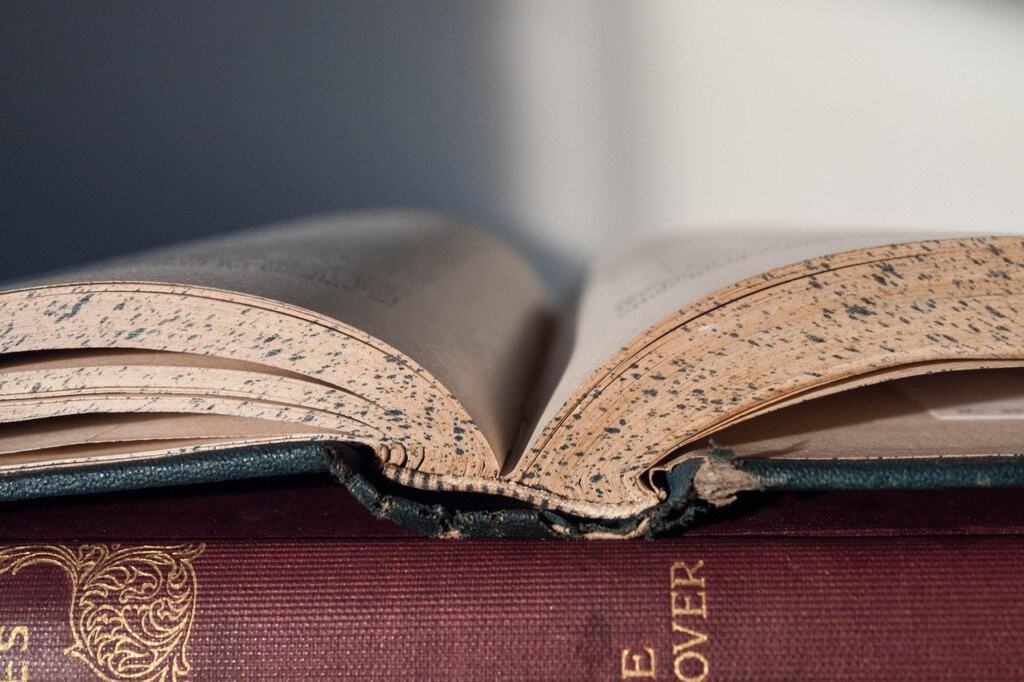
The chemistry behind the scent
Old-book smell is the result of several hundred volatile organic compounds off-gassing from paper and the object as a whole, as the ScienceDaily report puts it. No single molecule is responsible. The scent is a blend, and a few contributors are easy to link to the notes people describe.
- Lignin and the vanilla note: The vanilla-like smell comes from lignin, which is closely related to vanillin and present in all wood-based paper, according to the Perfume Society.
- Acids and the tang: Lignin oxidation produces acids, which account for the sharper edge in the smell and also the yellowing.
- Grassy and musty notes: Researchers describe grassy notes and an underlying mustiness as part of the overall profile. The pack does not tie these notes to individual compounds, so treat them as part of the blend.
- Ink and book glue: The various inks and the adhesives used to bind books together release volatile compounds too, so the cover, print and binding add to what the paper gives off.
That is why two books of the same age can smell different. The mix depends on the original composition of the object, including its paper substrate, applied media such as ink, and binding, as Phys.org notes. Analyzing the compounds wafting from a book can even reveal what materials it was made from, how old it is and which decay processes are under way.
Why the smell feels so good
The pleasure of the smell is largely about memory. The scent triggers memories instantly when we pick up a particular book, as the Perfume Society describes. The chemistry supplies the aroma, and your own reading history supplies the feeling attached to it.
That explains why a bookshop shelf and a childhood copy can smell so different in meaning even when the chemistry is similar. If you want to build a shelf worth sniffing, 13 Best Books To Read In Your 20s: Build Wisdom, Career Momentum, And Resilience offers a place to start, and Books Like Pride And Prejudice: 12 Timeless Classics And Fresh Retellings To Read In 2026 suits readers who prefer classics that tend to turn up in secondhand shops.
Frequently asked questions
Who studied the smell of old books?
A 2009 study in Analytical Chemistry, titled “Material Degradomics: On the Smell of Old Books,” used a non-destructive gas analysis to “sniff” 72 historical papers from the 19th and 20th centuries, as ScienceDaily reports.
Does a library or bookshop smell come only from the books?
No. The smell of books fuses with the smell of the rooms and the readers who habitually occupy them, according to Literary Hub.
Does acid-free paper smell like older paper?
Less so. Acid-free paper was introduced to bookmaking around 1970, removing most of the lignin, the compound behind the vanilla-like note, per Literary Hub. Books made with it have less of that source material to break down.